
Sandy Springs Address Eras
Different records cover different slices of a property's life. Start with the newest reliable source, then move backward. That approach avoids attaching an old household to a nearby property with the same number.
| Source | Years it covers | Where held | What it shows |
|---|---|---|---|
| GSCCCA deed index | Statewide baseline 1999 to present | GSCCCA / Fulton Clerk | Parties, instruments, book/page |
| Haines Criss-Cross | 1946 through 2016/17 | Central Special Collections | Occupants by address |
| Atlanta suburban directories | 1953 through 1986 | Central Special Collections | Households in the metro suburbs |
| Federal census | Public through 1950 | NARA and library databases | Household members and relationships |
| Fulton tax plats | 1946 through 1986 | Atlanta History Center | Owner, dimensions, tax payments |
| Permits and COs | City after 2005, Fulton before | OpenGov or county request | Work, dates, project participants |
For a recent transfer, begin with the assessor and deed index. For mid-century previous residents, Haines and suburban directories are stronger. Earlier work may require census, old Milton County records, physical deed books, maps, and probate.
Trace Fulton Owners Backward
Build the chain of title from today's parcel, not from the oldest name that looks familiar. The Fulton assessor search provides the current owner, parcel, situs, mailing address, legal description, and recent sale fields. Those details lead into the GSCCCA Real Estate Index.
- Copy the current parcel number, legal description, owner spelling, and sale reference.
- Find that owner's purchase deed by searching the owner as grantee.
- Confirm the seller, date, book/page, and legal description on the deed image.
- Search that seller as an earlier grantee, then repeat.
- At the online cutoff, take the citations to the Fulton records room and physical indexes.
- Grantor
- The person or entity transferring an interest.
- Grantee
- The person or entity receiving it.
- Chain of title
- The linked sequence of recorded transfers for one property.
- Legal description
- Land-lot, subdivision, lot, or boundary language that can outlast a street label.
Sandy Springs Deed Image Access
A free limited GSCCCA account can search index summaries but cannot view or print images. Researched access rates include $5 for four consecutive hours, $14.95 per month for Regular access, and $0.50 per printed page. Verify current pricing before purchase. Search modes include name, property details, and county book/page, with county, date, party-role, and instrument filters.
The GSCCCA account page shows the available access path.
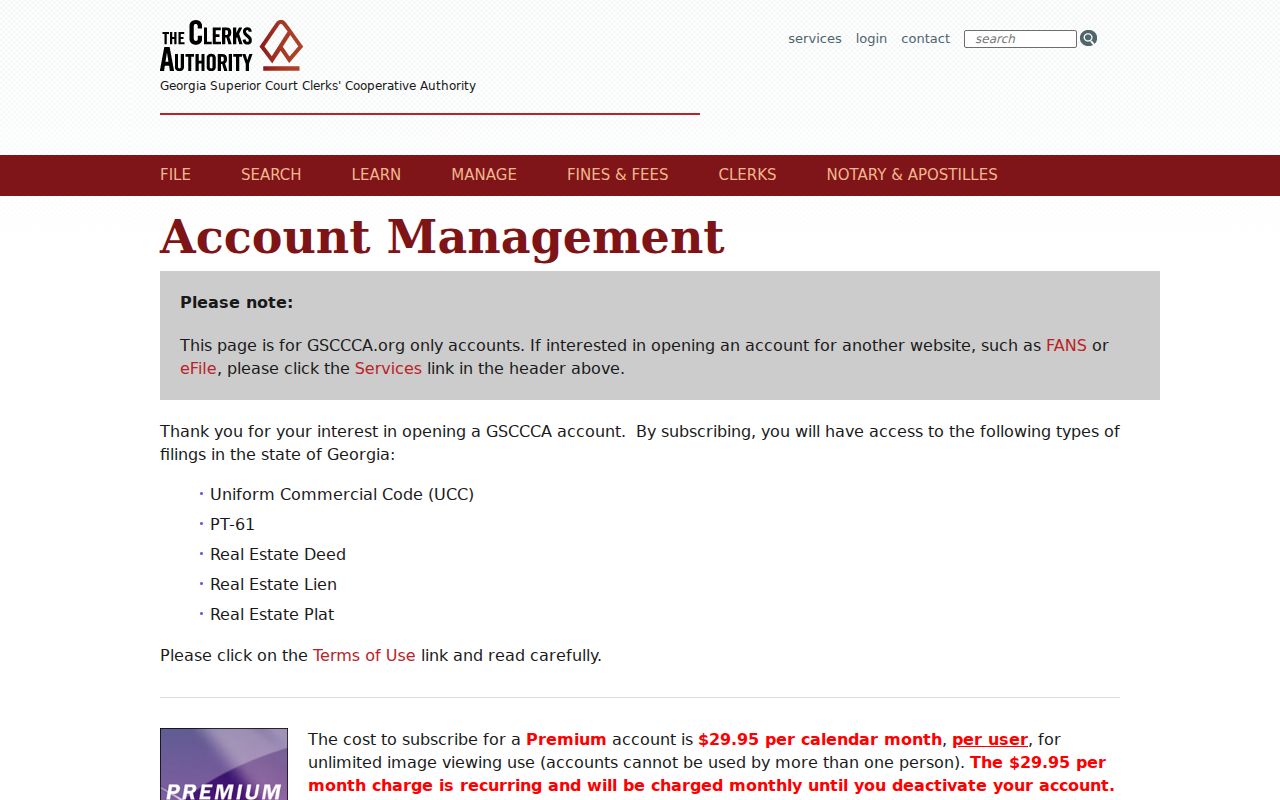
The account screen matters because an index citation and a scanned deed are not the same thing. The image is where the full legal description and return information may appear.
Sandy Springs Address Continuity
Modern Sandy Springs is a young municipal label. The city incorporated in 2005, and USPS approved Sandy Springs as the preferred last line in seven ZIP codes in March 2026. Historic entries may use Atlanta, Dunwoody, Roswell, or unincorporated Fulton. Search the street without a city, then repeat the known last-line variants.
No verified citywide street-renumbering crosswalk was found. If the number or name seems to shift, rely on parcel lineage, legal description, land lot, district, and subdivision. City addressing staff can help with current sequence or duplicate-street issues at addressing@sandyspringsga.gov.
Fulton Tax Plats Need Land Lots
The Atlanta History Center's Kenan Research Center holds Fulton tax plats from 1946 through 1986. They can record property dimensions, tax payments, and owners, but the collection requires the land-lot and district number. A modern assessor card supplies that bridge. This is a useful local quirk: a street address alone may not retrieve the right historic plat.
Kenan also holds deeds, building-permit material, maps, photographs, newspapers, and property cards. Its house-history method starts with known modern facts and moves backward. That guards against choosing the earliest same-number entry before proving it refers to the same parcel.
Sandy Springs Permits Date Changes
Sandy Springs OpenGov accepts permit type, date, address, permit number, or project name. The city launched it in July 2024 and migrated active records. Search or request city files for work after incorporation. Ask Fulton County for pre-December 2005 permits and certificates of occupancy.
A remodel date helps explain when a building changed. An applicant or contractor establishes a project role. A certificate authorizes use or occupancy. None names all previous residents. Compare those dates with the assessor's improvement history, tax plats, deeds, and directory occupants.
Sandy Springs Occupants Beyond Owners
Haines Criss-Cross directories arrange entries by street and address, which makes their 1946 through 2016/17 run the key occupant source. Atlanta suburban directories cover 1953 through 1986. The physical collections are at Fulton County Library's Central Special Collections, not the Sandy Springs branch. Email Library.SpecColl@fultoncountyga.gov to confirm a volume before visiting.
Record an occupant, ownership or rental mark, phone notation, and nearby names from the Haines volume. Then check the same surname in an alphabetical annual directory. Pair the 1950 directory neighborhood with the released 1950 federal census. The Sandy Springs city directory collection gives the shelf details while this workflow stays focused on one address.
- Locate the address in the closest Haines year.
- Record the exact entry and abbreviation key.
- Compare the year before and after to bracket a move.
- Match the address area to the 1950 census enumeration geography.
- Use deeds and obituaries to test the household identity.
Previous Residents Under Milton County
Milton County existed from December 1857 until its merger into Fulton on January 1, 1932. An early Sandy Springs-area family may therefore disappear from a Fulton-only search. FamilySearch's combined will material includes Milton from 1865 and Fulton from 1854, with a cross-county index reaching from 1833 through 1948.
This geography is especially useful for heirs. Follow the deed owner into probate, then compare wills, estate petitions, and obituaries. The county name on the record reflects the government of its time, not a different modern property.
Close Sandy Springs Resident Trails
When an owner dies, Fulton probate may identify a personal representative, will, heirs, or addresses stated when the case was filed. Start with the decedent's full name and death period. Compare public probate filings with an obituary through library databases such as HeritageHub or Georgia newspapers. An heir's address is historical evidence as of filing, not proof of a current residence.
The Fulton Probate Court is the primary county custodian for estate matters.
This county route is more relevant to a local house trail than unrelated federal case systems, though all assigned manifest images are included below for completeness.
Sandy Springs Previous Residents in Courts
Some later trail checks lead to federal filings. The Northern District of Georgia is the local federal court.
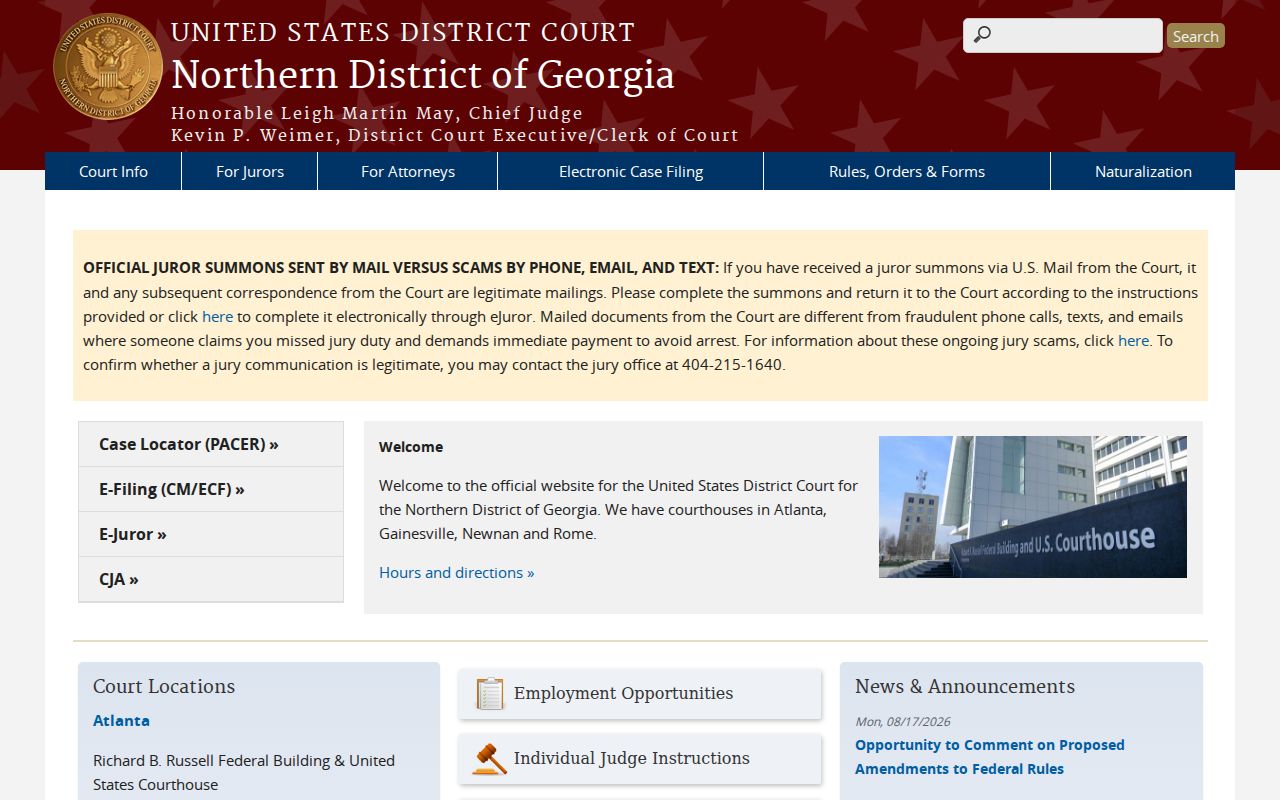
Use a court name match only after comparing dates, roles, and property facts. A shared name is not enough.
Federal docket access is provided through PACER.
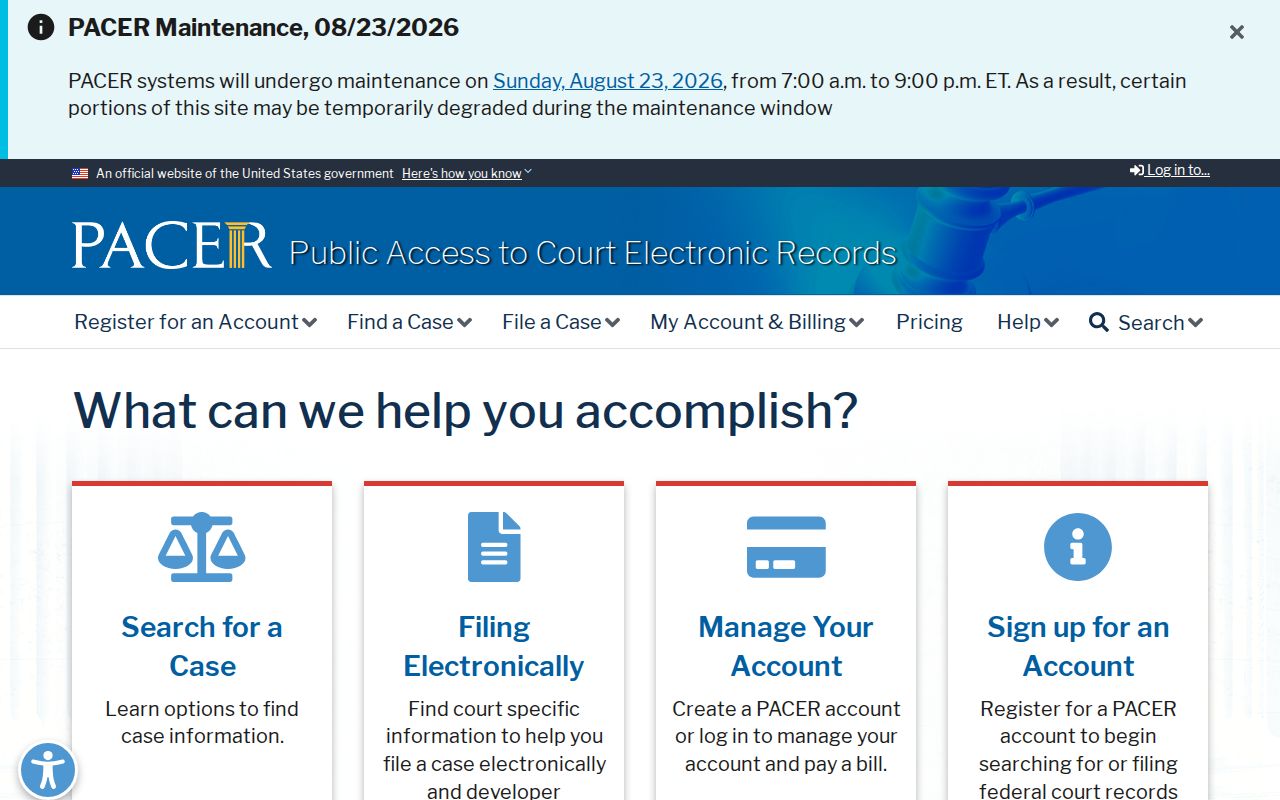
PACER may confirm a filing connection, but it is not a resident directory and should remain a secondary verification source.
Limits on Sandy Springs Past Households
Deeds establish ownership interests, not everyone who lived at an address. Directories omit people and preserve only a publication-year snapshot. Census schedules are public only through 1950 under the 72-year rule. Permits date work, and probate addresses reflect the date and role of a filing. Keep a source log and mark each conclusion as owner, occupant, project participant, heir, or unverified lead.
A focused Georgia Open Records Act request can recover a known city or county record that is not posted. Name the record series, address variants, and date range. The agency need not create a new house-history report.
Lawful personal use. Research previous residents for family history, estate work, house history, or personal curiosity. Never use living-person information to track, stalk, harass, or harm anyone.
Document Sandy Springs Resident Findings
A sound house history separates facts from conclusions. Create one line for each source with its date, custodian, search terms, address as printed, person named, role, and stable citation. A deed grantee is an owner. A Haines entry is an apparent occupant in that publication cycle. A permit applicant has a project connection. Keeping those roles distinct prevents a plausible story from becoming an unsupported claim.
Save the negative searches too. Note whether you tried Atlanta, Sandy Springs, unincorporated Fulton, and old Milton County. Record alternate street spellings and whether you searched by land lot, parcel, subdivision, book/page, or surname. A gap may reflect a changed jurisdiction, an unpublished year, a protected record, or an index limitation rather than a period when the property had no occupant.
Use copies carefully. Library guidance published in 2025 notes that scans do not replace original family materials. Preserve the original context, file name, source, and date when creating a research copy.
Resolve conflicts by favoring the record closest to the event. A recorded deed is stronger for a transfer than a later directory. A directory may be stronger for an occupant than the owner's tax-mail address. Census schedules add household relationships only for released years. If two same-name people remain possible, leave the identity open until a middle initial, spouse, parcel, probate role, or matching timeline separates them.