
Sandy Springs Directory Shelf
Sandy Springs did not become a city until 2005, so no long, standalone municipal directory run exists. The historical shelf is organized around Atlanta, its suburbs, and Fulton County. Fulton County Library System Central Special Collections is the main keeper. It documents city, suburban, telephone, and Haines address books that together reach from the nineteenth century into the 2016–2017 period. The collection names matter: a search limited to books labeled Sandy Springs will miss most residents who lived in the same area before incorporation.
| Collection | Years | Where Held | Access |
|---|---|---|---|
| Atlanta city directories | 1859–1860 through 1991 | Central Special Collections | Walk-in books; selected scans online |
| Atlanta suburban directories | 1953–1986 | Central Special Collections | Walk-in, call no. 917.581 ATLANTA |
| Haines criss-cross series | 1946–2016/17 | Central Special Collections | Walk-in, address to occupant |
| Georgia White Pages, Atlanta | Verified November 1975 item | Digital Library of Georgia and Library of Congress | Digital metadata and scan |
| Federal census schedules | 1820–1880, 1900–1930; public through 1950 | Central Special Collections and federal archives | Microform and online research paths |
Coverage is not uniform. The bound bibliography describes Atlanta city volumes from 1867 through 1991, while the library's fuller account reaches back to 1859–1860. Publication ended in 1991. Exact publishers for each suburban year still require a shelf check, and the research did not verify a scanned Sandy Springs address. Ask staff to confirm a volume before traveling rather than assuming every year survives.
Sandy Springs Directory Access
The physical city directory run is at Central Library Special Collections, not at the Sandy Springs branch. Central's Georgia Collection also holds maps, microforms, ephemera, clipping files, cemetery and vital material, military sources, family histories, and newspapers. Its map holdings include nineteenth- and twentieth-century street, land-lot, zoning, annexation, and house-number evidence. The Sandy Springs branch at 395 Mount Vernon Highway offers computers and database access, but it is not the documented home of the directory shelves.
Email Library.SpecColl@fultoncountyga.gov to ask whether a needed year is present. Include the name, likely address, and year range. Library staff can also help identify the correct collection label. The 2025 family archive guidance stresses that digital scans do not replace original records and points researchers toward staff help.
The library's archive guidance is shown below. The image confirms the family-history service that supports a careful Sandy Springs city directory search.
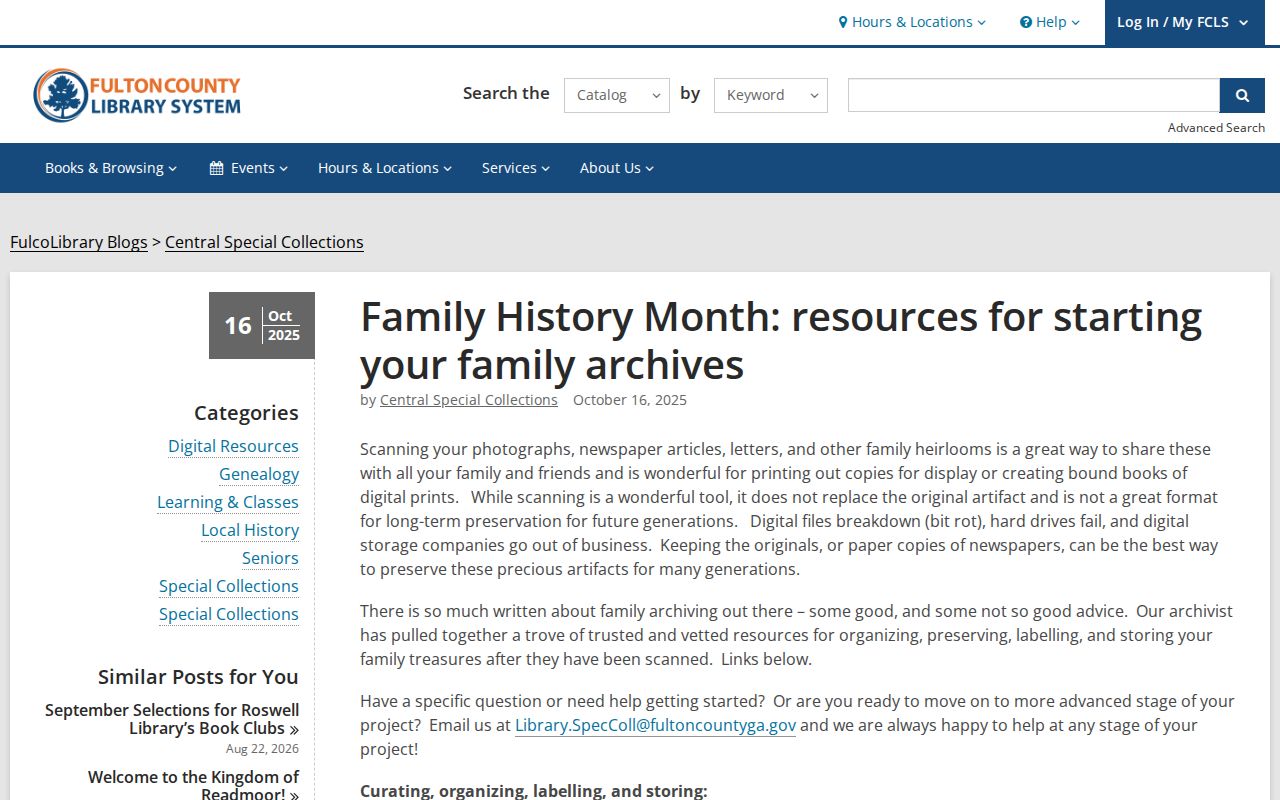
Use the catalog and staff response to plan the visit, then photograph the volume title page and abbreviation key with each relevant entry.
Sandy Springs Suburban Directory Years
The 1953–1986 Atlanta suburban run is often the most direct printed bridge to Sandy Springs households. Its label reflects the geography of the period, not an error. Sandy Springs remained unincorporated while Fulton County supplied local services, so the names Atlanta, Fulton County, and Atlanta suburban are normal catalog and entry terms. A missing result under the modern city name should lead to the street name and nearby community label.
Later Haines volumes extend the address-first approach from 1946 through 2016–2017. Their numeric street sections can place an occupant at a house and show nearby entries. A 1968 regional volume marks homeowner or renter status and telephone presence, but those marks are only a comparative example. Inspect the key in each volume before treating a symbol as fact.
Digitized Sandy Springs Directory Paths
The Digital Library of Georgia Atlanta directory collection supplies selected scans, while Emory and the Internet Archive hold other digitized volumes. Digital searching is useful, but optical text recognition can misread short names, initials, street abbreviations, and worn print. Browse the alphabetical pages around a likely surname and check the street section instead of trusting one exact-text query.
Fulton library's community history links connect local history sources with digitized Atlanta material. A verified November 1975 Georgia White Pages item offers another telephone-book path. The older 1909–1910 Young & Co. business volume shows the era's compact pattern: surname and initials, line of work or office role, then street or building address.
The local-history collection page appears below. It helps place Sandy Springs research inside the broader Fulton and Atlanta archive.
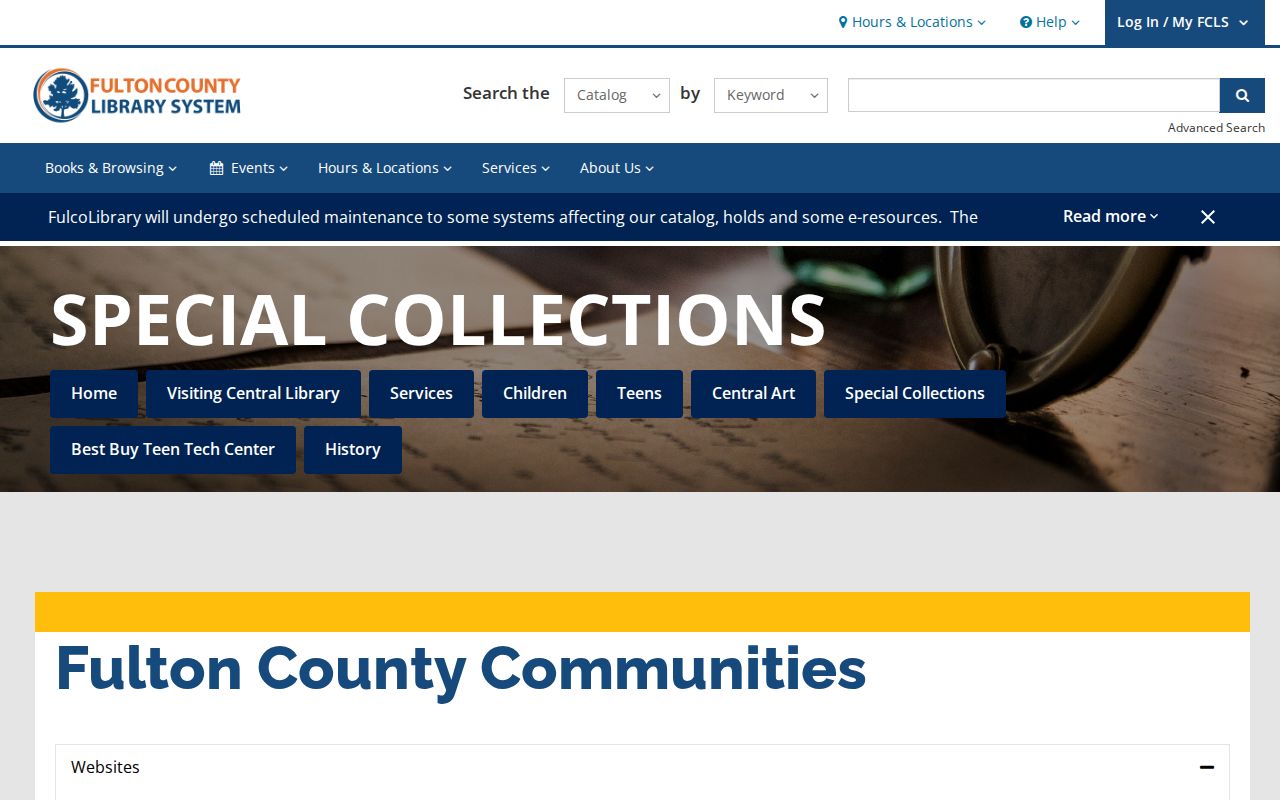
Use the digital copy for discovery, then cite the volume, year, page, and collection so another researcher can reproduce the find.
Read Sandy Springs Directory Entries
A city directory entry compresses several facts into one line. An alphabetical listing can connect a person to a spouse, occupation, employer, and residence. A separate street section may arrange households by house number. The entry is evidence that the publisher associated a person with a place during that edition's work, not proof of ownership or uninterrupted residence.
| Name | Usually the householder; a spouse may appear in parentheses. |
|---|---|
| Work | An occupation, employer, business, or office role may follow. |
| Residence | A house number and abbreviated street connects the entry to place. |
| House mark | Some later runs distinguish an owner, renter, or telephone listing. |
| Household clue | Separate wage earners, spouse details, or widow notations can link relatives. |
- Criss-cross directory
- An address-keyed book that runs from street and house number to the listed occupant.
- Householder index
- A section arranged by the principal name used for each household.
- Abbreviation key
- The volume's own guide to shortened words and symbols. Its meanings outrank assumptions drawn from another edition.
Old Milton Changes Directory Research
Some older Sandy Springs-area records cross a county line in time. Milton County existed from December 1857 until it merged into Fulton on January 1, 1932. A Fulton-only search can therefore miss wills, deeds, and marriages filed under Milton. FamilySearch's combined will collection begins Fulton material in 1854 and Milton material in 1865, with cross-county indexing through 1948.
Directory chronology follows the metro publishing market, not those government dates. Atlanta runs begin in 1859–1860, the suburban set begins in 1953, Haines begins in 1946, and Sandy Springs incorporates much later. Keep the directory citation separate from the custodian history. If a household vanishes near a date boundary, check both geography and the next annual edition before deciding the family moved.
Heritage Sandy Springs adds local context. Its museum and Heritage Collection preserve photographs, oral histories, and community material about rural life, suburban growth, and incorporation.
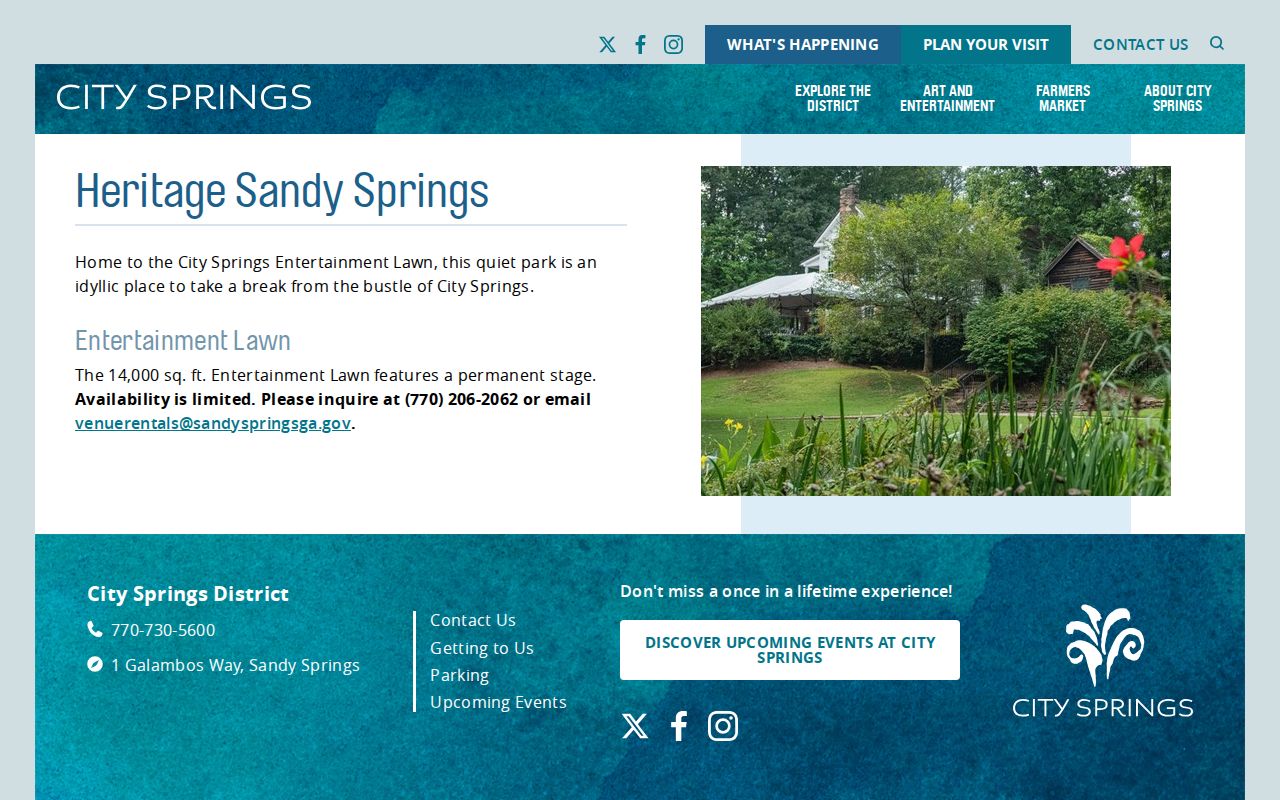
That context can explain a place name or neighborhood term found beside a household in a metro directory.
Sandy Springs Heritage Inventory
A 2023 Georgia Historical Records Advisory Council grant gave the city $4,680 for a public online inventory of the Sandy Springs Heritage Collection. The project answers a real archive problem. Municipal government is only two decades old, while the community's record trail stretches through county files and metropolitan collections. An inventory can reveal photographs, oral histories, and objects that do not appear in a name index.
The city's twentieth-anniversary exhibit later gathered early-cityhood photographs, first-responder artifacts, and commemorative items. These sources do not replace a city directory entry. They add dates, institutions, and neighborhood terms that make the next catalog or newspaper search more precise.
Trace Sandy Springs Family History
Annual city directories fill the years between federal censuses. Population schedules are now public through 1950 under the 72-year rule. Pairing the sources can turn a short directory line into a household with relationships, ages, and birthplaces. Work one year at a time, and preserve alternate spellings rather than forcing every hit into one identity.
- Find the first likely alphabetical entry, then copy the name exactly as printed.
- Follow that person through nearby years and note every street, spouse, and work change.
- Open the Haines or street section to test the address and see adjacent listings.
- Compare the 1950 directory neighborhood with the released 1950 census household.
- Bridge later gaps with assessor records, deeds, tax plats, newspapers, and obituaries.
A disappearance has several possible causes: a move, death, missed canvass, changed household name, or choice not to list. HeritageHub, Georgia Newspapers, and Historical Black Newspapers can test an obituary or news trail. Auburn Avenue Research Library's African American collections also help correct omissions in older mainstream directories. For modern address-keyed work, move to the Sandy Springs street directory rather than treating an old printed listing as current.
Fulton library's genealogy resources include MyHeritage, Fold3, HeritageHub, and Ancestry Library. The genealogy database page explains that Ancestry is available in the library, while several other tools have cardholder or remote paths.
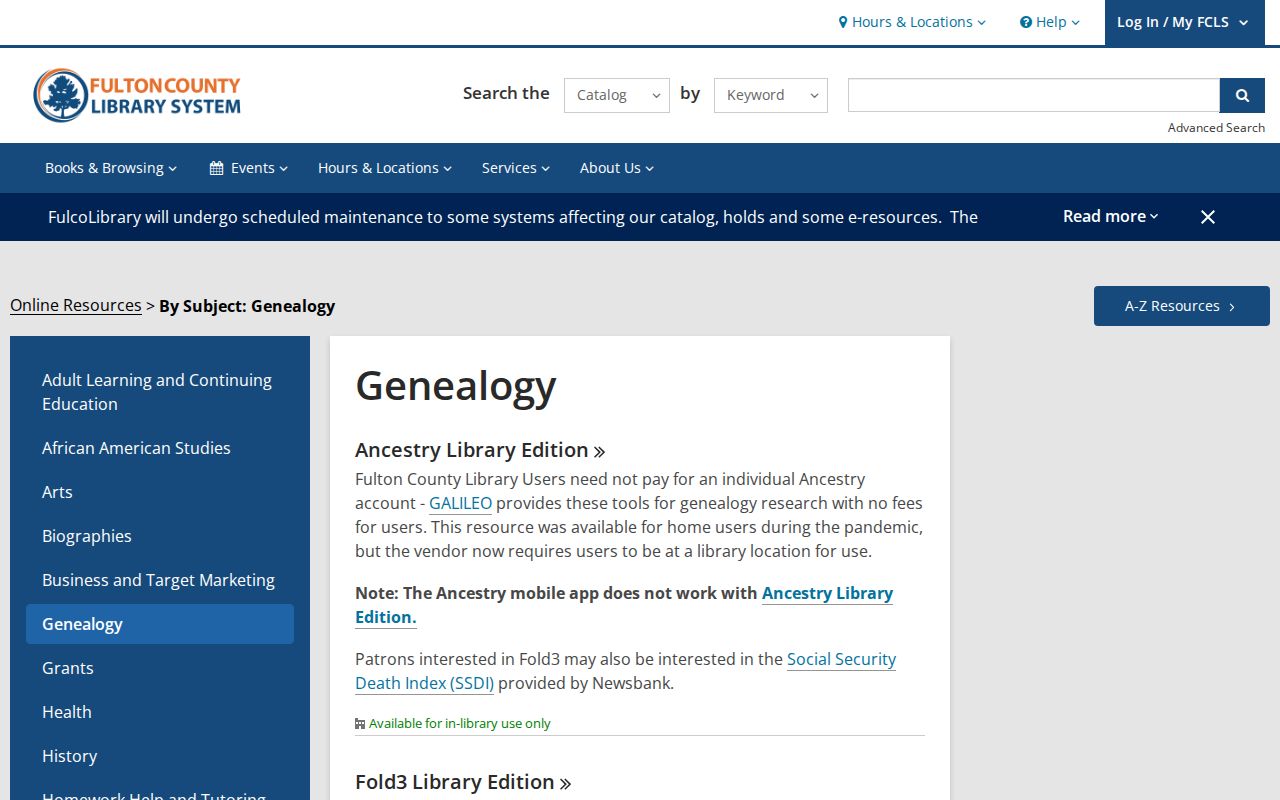
Database access can extend a shelf find into census, military, obituary, and family-history records without changing what the original directory entry actually states.